

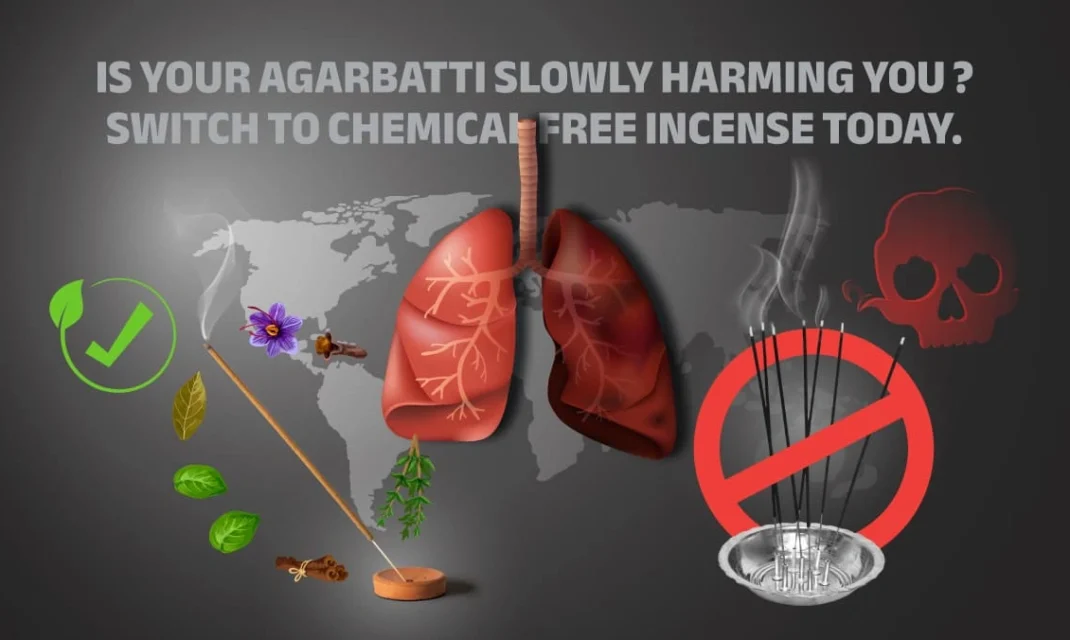
Incense sticks, or agarbatti, hold a deep cultural and spiritual significance in India, yet growing research highlights that their regular use may carry hidden health risks. Traditional agarbatti often rely on charcoal as a base, which produces dense smoke when burned. This smoke contains fine particulate matter (PM2.5), carbon monoxide, and volatile organic compounds that can irritate the lungs and pollute indoor air. Studies have compared the particulate emissions of incense to those of cigarettes, showing that prolonged exposure in poorly ventilated spaces may increase the risk of respiratory problems, asthma flare-ups, and even certain cancers. Children, elders, and individuals with pre-existing conditions are especially vulnerable to these side effects. Beyond health, harmful agarbatti also contribute to indoor air pollution levels that exceed safe standards, making daily rituals potentially hazardous.Lets talk about the Incense Harmful to Health!
In India, where incense burning is woven into festivals, poojas, and household traditions, awareness of these risks is crucial. Choosing safer alternatives—such as charcoal-free, herbal, or Bambooless incense—can preserve the sanctity of rituals while protecting family health. Thus, while agarbatti remains a symbol of devotion and purity, understanding its harmful side effects ensures that spiritual practices do not compromise well-being.
What’s Actually Inside Regular Agarbatti?
Regular agarbatti, the incense stick, is typically made from a blend of combustible base materials, binding agents, fragrance oils, and fillers. The core ingredient in many conventional varieties is charcoal powder, which serves as the fuel to keep the stick burning. This charcoal is often mixed with sawdust or wood powder to create volume and consistency. A binding gum, such as jigat (made from bark or plant resins), holds the mixture together and allows it to be rolled onto a bamboo stick. To impart fragrance, synthetic aroma chemicals or low-cost oils are frequently added, mimicking traditional scents like sandalwood, rose, or jasmine but without their natural purity. In some cases, petrochemical-derived compounds or artificial fixatives are used to prolong the scent, which can release harmful residues when burned. The bamboo stick itself contributes to smoke density, while the combination of charcoal and synthetic additives produces fine particulate matter and volatile organic compounds. Thus, while regular agarbatti may appear fragrant and devotional, its composition often hides a cocktail of smoke-producing agents that can compromise indoor air quality and health, especially when used daily in enclosed spaces.
Who Is Most at Risk? with the Incense Harmful to Health
The people most at risk from regular incense stick (agarbatti) use are those whose lungs and immune systems are more sensitive to smoke and chemical exposure.
- Children, for instance, breathe faster and inhale more pollutants relative to their body size, making them highly vulnerable to respiratory irritation and long-term damage.
- Elders, especially those with chronic conditions like asthma, bronchitis, or heart disease, face heightened risks because incense smoke contains fine particulate matter (PM2.5), carbon monoxide, and volatile organic compounds that strain weakened systems.
- Pregnant women are also at risk, as exposure to indoor pollutants can affect both maternal health and fetal development.
- Individuals with allergies or sinus problems may experience headaches, watery eyes, or nasal irritation from synthetic fragrances and chemical binders used in regular agarbattis.
- Even healthy adults are not immune—daily exposure in poorly ventilated homes can gradually increase the likelihood of lung infections or cardiovascular stress.
In India, where incense burning is deeply tied to rituals and festivals, awareness of these risks is crucial. Protecting vulnerable group’s means shifting toward safer alternatives like herbal, charcoal-free, or Bambooless incense, ensuring devotion and tradition continue without compromising the health of those most at risk.
What Is Chemical-Free / Charcoal-Free Agarbatti?
Chemical-free or charcoal-free agarbatti represents a safer, more eco-conscious evolution of traditional incense. Unlike regular sticks that rely on charcoal as a burning base, these agarbattis are crafted using natural, herbal powders such as wood flour, cow dung powder, or plant-based resins, which produce minimal smoke and avoid releasing toxic residues. The absence of charcoal means the fragrance is carried by gentler combustion, reducing harmful particulate matter (PM2.5) and volatile organic compounds that can irritate the lungs. Instead of synthetic aroma chemicals, chemical-free agarbattis often use pure essential oils or Ayurvedic blends of sandalwood, rose, camphor, and gugal, ensuring both therapeutic and devotional resonance. Many are bambooless, further lowering smoke density and making them safer for children, elders, and those with respiratory sensitivities. By focusing on natural binders like jigat or gum resins, these incense sticks maintain structural integrity without resorting to petrochemical additives. In India, where incense burning is woven into daily rituals, festivals, and temple traditions, charcoal-free agarbatti offers a way to preserve cultural sanctity while protecting health and the environment. It embodies a balance of devotion and responsibility—allowing fragrance to uplift the spirit without compromising the purity of the air we breathe.
Surbhika incense sticks are designed to protect the user’s health while allowing them to carry forward their devotional and cultural values with purity. Made without charcoal and crafted from herbal, eco-conscious ingredients, incense like Surbhika produce a clean, low-smoke burn that safeguards the lungs and keeps indoor air safe. Infused with authentic Ayurvedic fragrances like sandalwood, rose, camphor, and gugal, Surbhika incense resonate with both ritual sanctity and therapeutic calm. Their bambooless design further reduces harmful emissions, making them suitable for children, elders, and sensitive individuals. By blending eco-responsibility with spiritual tradition, Surbhika ensures that every act of devotion is accompanied by safety, sustainability, and cultural pride.
Inorganic vs Natural Herbal Incense
Suggested Comparison Table
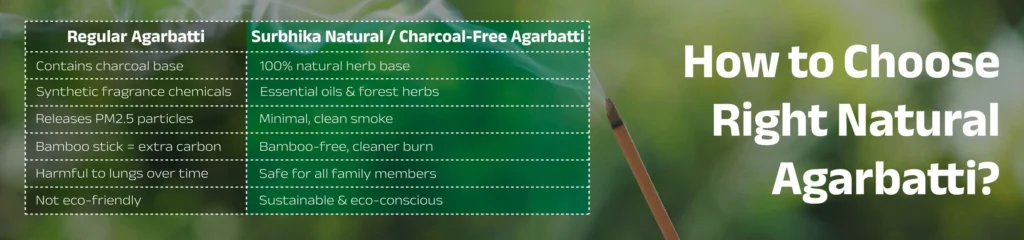
Lets have a small comparision on Inorganic Agarbatti and Natural Hearbal Incense Dhoop Sticks
Regular Agarbatti |
Vs Surbhika Natural / Charcoal-Free Agarbatti |
|---|---|
Contains charcoal base
|
100% natural herb base
|
Synthetic fragrance chemicals
|
Essential oils & forest herbs
|
Releases PM2.5 particles
|
Minimal, clean non toxic healthy smoke
|
Bamboo stick = extra carbon
|
Bamboo-free, cleaner burn
|
Harmful to lungs over time
|
Safe for all family members
|
Not eco-friendly
|
Sustainable & eco-conscious
|
7 Benefits of Switching to Natural Incense
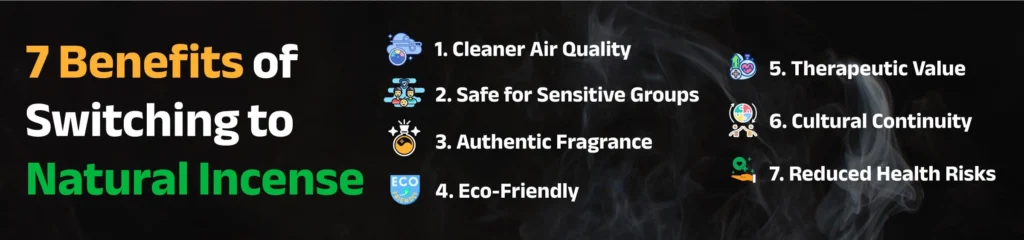
- Cleaner Air Quality – Natural incense like Surbhikais charcoal-free, producing far less smoke and reducing harmful particulate matter indoors.
- Safe for Sensitive Groups – Gentle herbal blends make it safer for children, elders, and those with asthma or allergies.
- Authentic Fragrance – Made with pure essential oils and Ayurvedic ingredients like sandalwood, rose, and gugal, offering true therapeutic aromas.
- Eco-Friendly – Biodegradable, bambooless designs minimize environmental impact and align with sustainable living.
- Therapeutic Value – Natural resins and herbs calm the mind, ease stress, and support meditation without chemical interference.
- Cultural Continuity – Preserves the sanctity of rituals and traditions while ensuring health-conscious devotion.
- Reduced Health Risks – Avoids synthetic chemicals and petro-based fragrances that can cause headaches, respiratory irritation, or long-term harm.
Switching to natural incense allows devotion and wellness to coexist, creating a sacred atmosphere that uplifts the spirit while protecting both family health and the environment.
How to Choose the Right Natural Agarbatti?
Choosing the right natural agarbatti requires a mindful checklist that balances health, tradition, and ecological responsibility. First, ensure the incense is charcoal-free, as this prevents harmful smoke and fine particulate matter from polluting indoor air. Second, look for herbal or Ayurvedic blends made with authentic ingredients like sandalwood, rose, camphor, or gugal, which provide therapeutic and devotional resonance without synthetic chemicals. Third, prefer bambooless designs, since bamboo cores add unnecessary smoke and emissions. Fourth, check for eco-conscious packaging and sourcing, ensuring the product supports sustainability and avoids plastic or harmful residues. Fifth, verify that the fragrance is derived from natural essential oils rather than petrochemical-based perfumes, which can cause headaches or respiratory irritation. Sixth, consider family safety, choosing sticks that are gentle enough for children, elders, and sensitive individuals. Finally, align your choice with cultural authenticity, selecting incense that honors traditional rituals while protecting modern wellness. By following this checklist, you can embrace devotion and purity without compromising health or the environment, making natural agarbatti a conscious choice that uplifts the spirit, safeguards the home, and sustains cultural values in harmony with ecological balance.
FAQ's Natural Agargatti & Incense Harmful to Health
Q) Is regular agarbatti really harmful to health?
A) Yes, regular agarbatti can be harmful because it releases dense smoke with fine particulate matter and toxic compounds. Prolonged use in closed spaces may irritate the lungs, trigger asthma, and increase long-term health risks.
Q) What is charcoal-free agarbatti made of?
A) Charcoal-free agarbatti is made from natural herbal powders, plant-based resins, and wood flour instead of charcoal. It uses pure essential oils and Ayurvedic ingredients like sandalwood, rose, camphor, or gugal to create fragrance without harmful chemicals.
Q) Is natural incense safe for children and pregnant women?
A) Natural incense such as Surbhika made from herbal, charcoal-free ingredients is generally safer, but even then it should be used with good ventilation and moderation. Children and pregnant women are more sensitive to smoke, so gentle, low-smoke blends are preferable, and prolonged exposure should be avoided to protect health.
Q) How is Surbhika agarbatti different from regular brands?
A) Surbhika agarbatti stands apart from regular brands because it is charcoal-free, bambooless, and crafted with pure Ayurvedic ingredients, ensuring a clean, low-smoke burn that protects health. Unlike synthetic incense, it uses natural fragrances like sandalwood, rose, camphor, and gugal, offering both devotional purity and therapeutic benefits while being eco-conscious and family-friendly.
Q) Can I use herbal incense sticks for daily pooja?
A) Yes, herbal incense sticks by Surbhika can be safely used for daily pooja because they are charcoal-free and low-smoke, protecting the air quality. Their natural Ayurvedic ingredients ensure devotional purity while keeping the environment family-friendly.Click here to buy Natural Incense Sticks online
